Launch announcement: October 22, 2026. Added to the News archive October 30, 2026.
Bring the question you are already working on
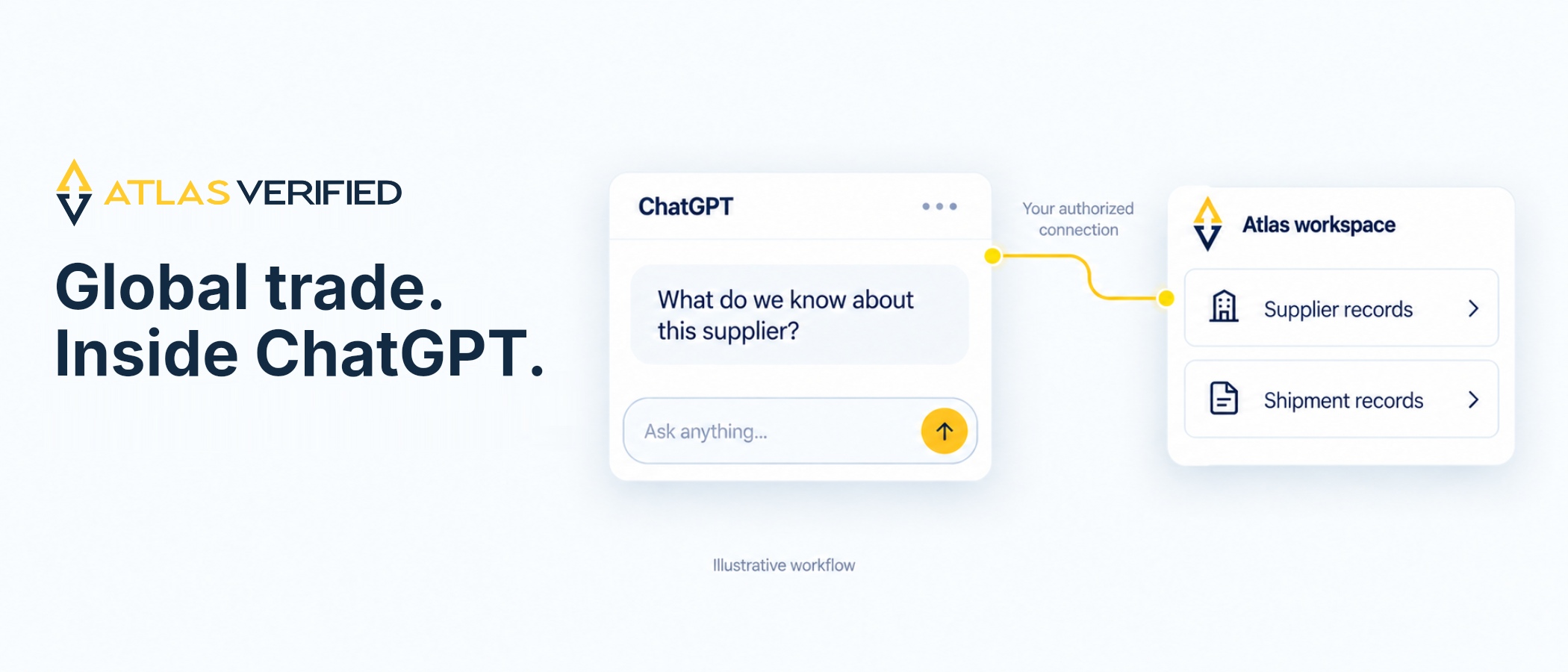
“What do we know about this supplier?” sounds like a simple question. Answering it can mean finding the right company, checking the information already on file, and working out what still needs investigation. Before anyone can make a decision, someone has to bring that context together.
Atlas Verified is now available in ChatGPT. It gives trade teams another way to reach the information they work with in Atlas, from the conversation where they are already asking questions. We announced the launch on October 22. The reason we built it goes beyond putting another app in a directory: we want people to be able to start with the work they need to do.
A supplier question should be able to lead to a supplier record. A question about a shipment should be able to lead to its details. The conversation becomes a way to find and work through that information, without requiring the person asking to know the structure of the application first.
The useful part is the connection to your records
Consider a team reviewing a supplier before its next order. The first step might be finding the supplier’s existing Atlas record. From there, the team can examine the information available and decide what needs closer attention. Atlas exposes tools for finding suppliers and retrieving their details, including records shared with the organization. It also exposes tools for finding shipments and reading shipment details.
Those are modest examples, deliberately. A useful starting point is a question you can check against a record you know. You can see whether you have the right supplier, whether the shipment is the one you meant, and whether the information is enough to answer the question. The next question can follow from what you actually found.
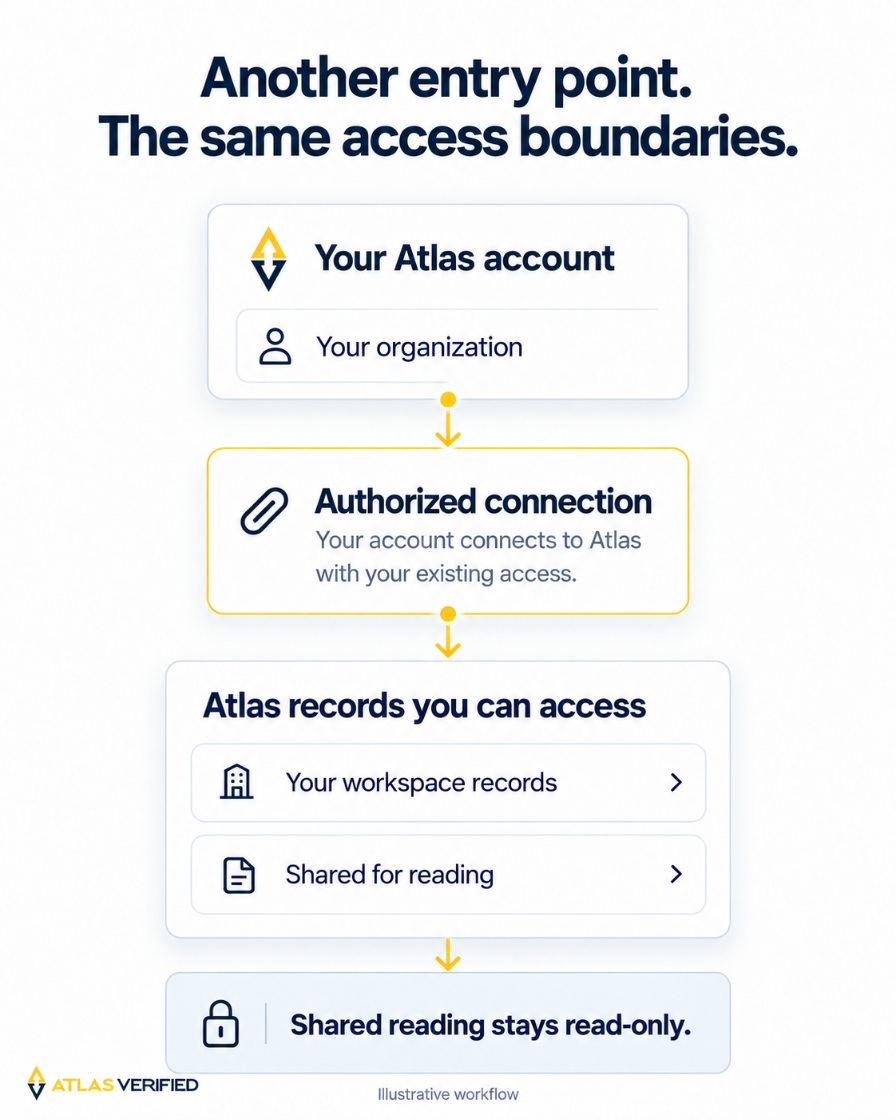
The connection carries the context of the Atlas account and organization. A supplier shared for reading remains a shared record with limited access. Moving the conversation into ChatGPT does not change who owns the underlying information or turn an incomplete record into a completed investigation.
Atlas stays behind the work
This launch is part of a direction we are pursuing across Atlas. People will increasingly choose an interface according to the task in front of them. Sometimes they will want a workspace they can browse. Sometimes they will want to ask a question and follow the answer. The records, tools, and permissions supporting that work need to remain coherent as the entry point changes.
For the ChatGPT app, that means Atlas continues to provide the connection to the trade operation. The supplier and shipment records still live in Atlas. ChatGPT provides another place to interact with the tools that reach them. We can make the conversation more useful by giving it access to the relevant business context, while continuing to develop that context in the system where the team maintains it.
We will explore the engineering behind this approach in separate articles. Here, the change is practical: if your team already works in ChatGPT, there is now an Atlas app you can bring into that workflow.
Start with one real question
Choose a supplier or shipment you already know. Use it as your first question, inspect the information returned, and take the next step from there. That is a better introduction than a broad demonstration with no connection to the work on your desk.
Bring your next trade question to Atlas Verified in ChatGPT.