
The first truck is at the scale with fruit from two growers. In the cellar, someone needs to know whether yesterday’s transfer left enough room in the destination tank. Sales has a distributor on the phone asking how many cases can ship Friday. All three questions have answers somewhere in the winery. The hard part is getting the right answer to the person who needs it while the truck, the crew and the buyer are still there.
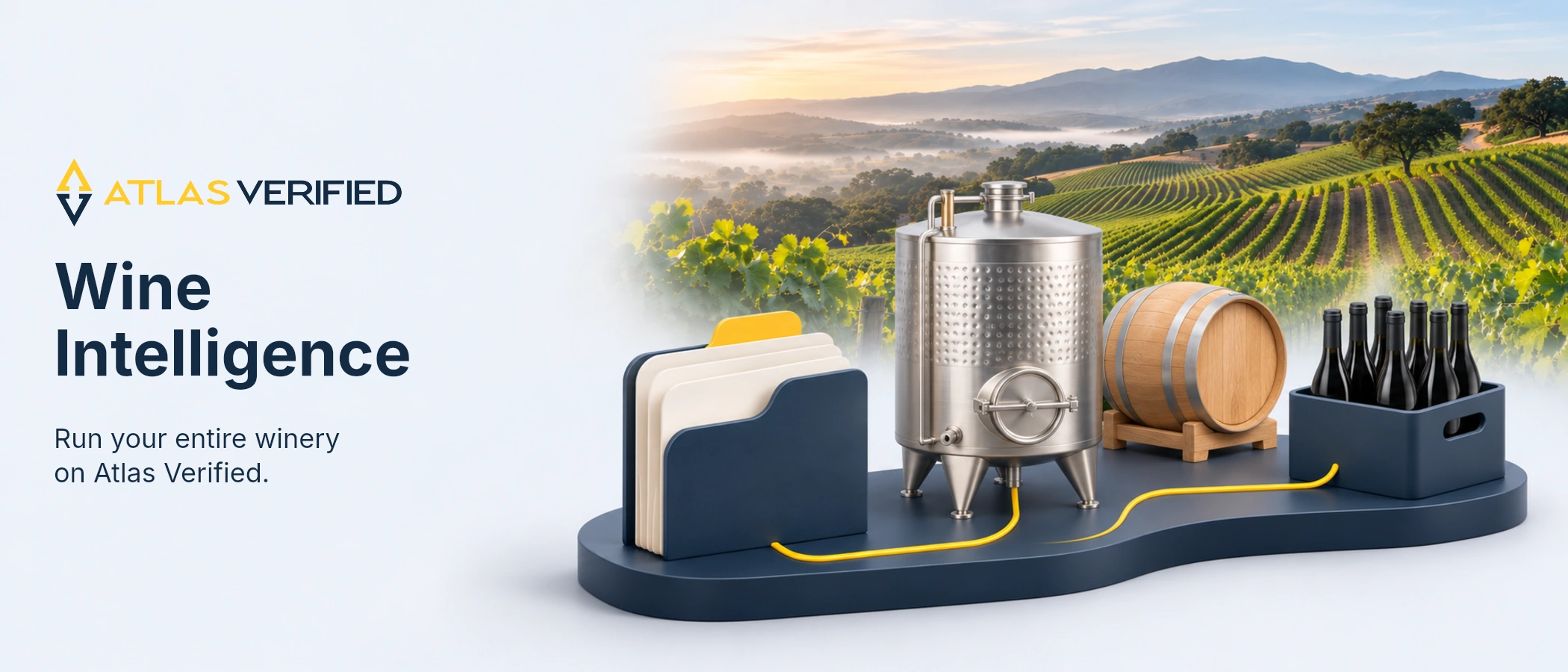
We’re introducing Wine Intelligence so you can run your entire winery on Atlas Verified. The vineyard manager can plan a pick, the cellar lead can release a work order, and the sales team can reserve cases from the resulting bottling run. Each team works with the details it needs. When a quantity, location or release decision changes, the other teams can follow it back to the record that explains it.
Plan the pick and settle with the grower
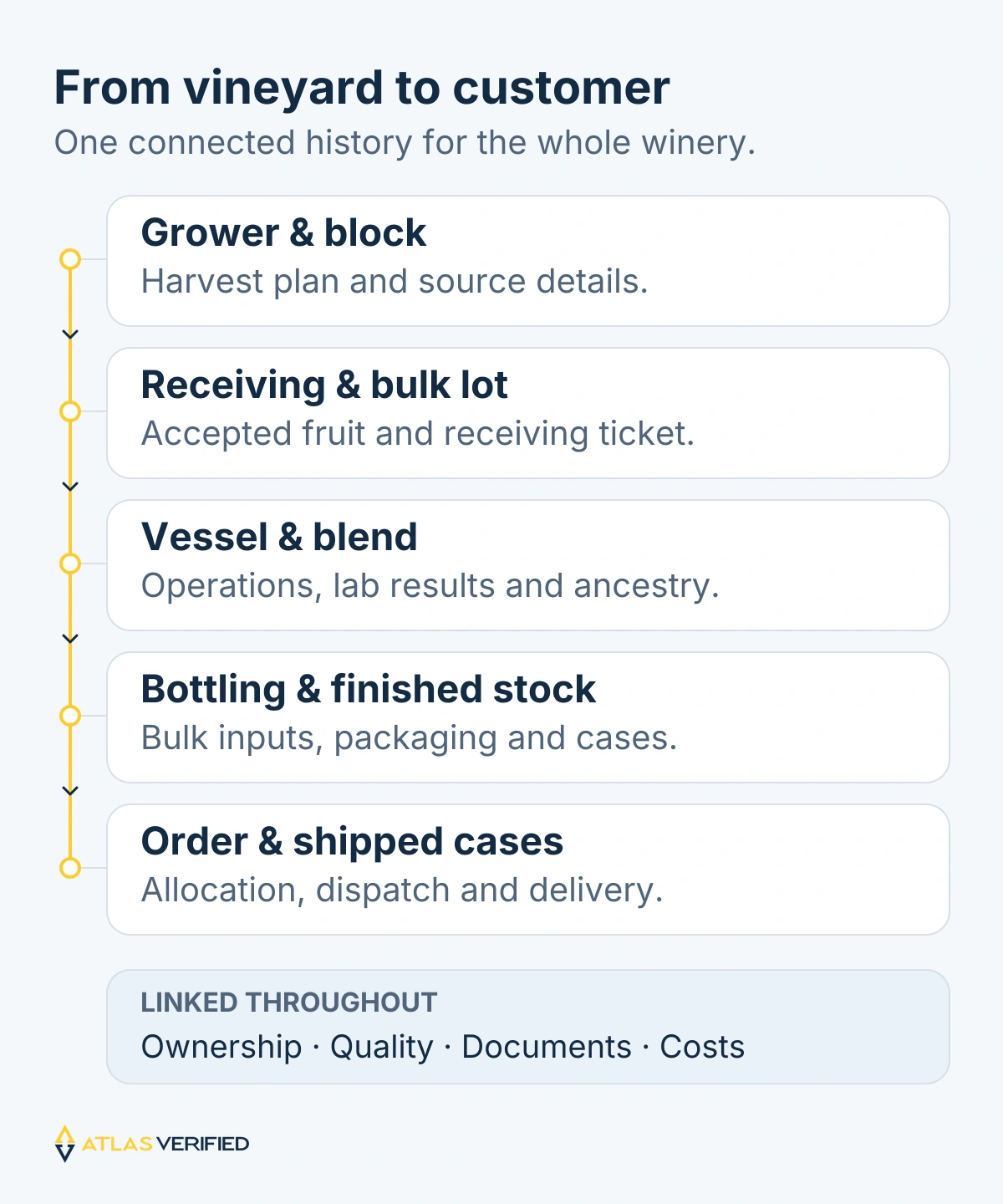
A harvest plan starts with the block, variety, expected quantity and receiving window. For purchased fruit, the grower agreement also tells receiving what the winery committed to buy and on what terms. A crew preparing for tomorrow’s arrivals can see which deliveries have been released and which still need a decision.
At the scale, receiving records the gross and tare weights, attaches the ticket and enters the quality decision. If two growers share a truck, their fruit can be allocated separately. If the truck delivers only part of an order, the receipt records what arrived. Later, the person settling the grower’s bill can see the accepted quantity, the agreed price, and the reason for a premium or deduction. The same purchasing records cover bulk wine, packaging and services.
Decide what can move in the cellar
Before a racking job, the cellar lead can look up the source lot, its available volume and the space in the receiving tank. Ownership matters here. A tank might have enough headroom for a transfer while holding wine belonging to a custom-crush client. Wine Intelligence shows what a tank or barrel group holds, who owns it and what work is due. The work order carries the instructions. The crew records the actual quantities moved, any loss and the readings taken during the job.
A winemaker considering a blend can try different proportions without committing the wine. Each trial shows contributing lots, volume, estimated cost and the source evidence behind a vintage, variety or origin claim. The chosen blend gets its own record of the measured inputs and output. Lab results stay with the sampled lot and vessel, including the collection time, method and units. A winemaker reviewing a result can see earlier readings and record which quantity to hold or release.
Hand a paper work order to your Chief of Staff
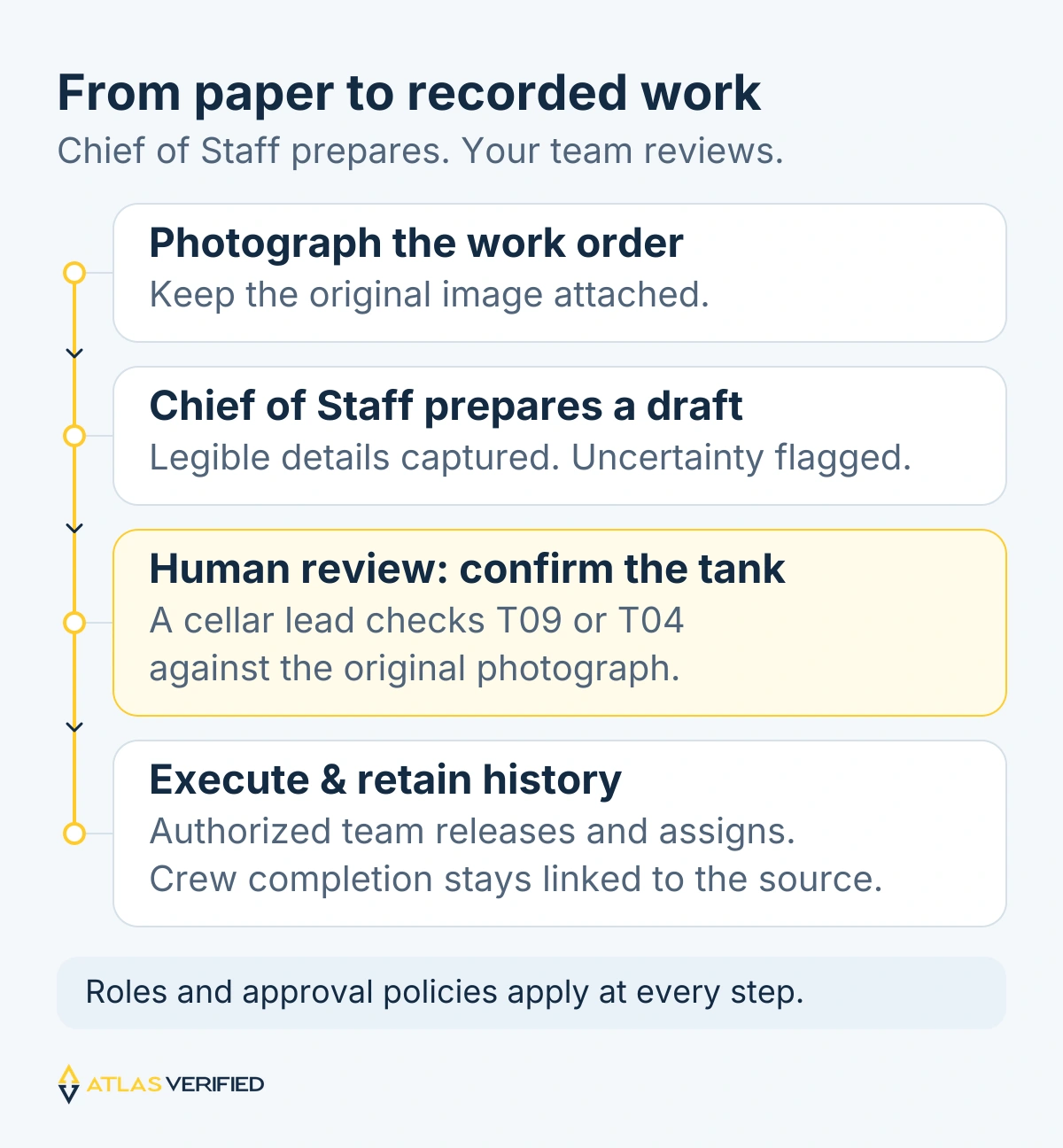
Take a familiar cellar problem. A crew member photographs a handwritten racking order and asks the Chief of Staff to make it readable. The Chief of Staff prepares a draft with the date, instruction and legible quantities, then attaches the original photo. The destination tank looks like either T09 or T04. That field is flagged for review. The cellar lead can open the photo, confirm the intended tank with the person who wrote the order and correct the draft before releasing it.
From there, an authorized team member can assign the job. The crew records where the wine actually went and how much arrived. The photo, reviewed instruction and completion record stay together. The same Chief of Staff and AI employees can prepare the next day’s receiving list or check a distributor allocation, using the tools, roles and approval steps the winery already uses.
Reconcile the bottling run and trace a case
Before the line starts, the bottling team checks the eligible bulk lots, label version, bottle size, closures and case configuration. At the end of the run, it records the wine issued, cases produced, rejects, remaining bulk and losses. A warehouse count now has an explanation for the difference between the volume drawn from the tank and the wine that made it into finished bottles.
If a distributor asks where a case came from, start with its lot and follow the bottling run back through the blend, vessels and source fruit. If a supplier instead flags a closure lot, trace forward to the bottling runs that used it, the cases still in storage and the customer deliveries affected. The trace can go down to an individual bottle where the winery records serial numbers.
Promise the cases you can ship
A distributor asks for 200 cases. Sales can check the requested vintage, lot, owner and location, then see what is available after quality holds and earlier reservations. The warehouse gets picking instructions for the eligible cases and the delivery commitment. If only part of the order ships, the fulfilled quantity carries through to the commercial record. Carrier details, delivery evidence and any later credit give sales and the warehouse a common account of what happened.
That order also has a cost history. Fruit, bulk wine, processing, packaging and freight can be followed through the blend and finished case. A manager reviewing margin can see which supplier charges are final, which costs are estimates and what a late invoice would change.
Reconcile stock by owner and premises
An estate winery may crush its own fruit and buy grapes from a neighbor. A custom-crush facility may process wine for several clients in the same cellar. Two proprietors can share premises while keeping separate stock and responsibilities. Wine Intelligence records ownership, custody, location and processing responsibility separately. Moving client wine to a third-party warehouse changes where it is held. Its owner is still identifiable in the cellar history, warehouse count and period report.
At close, the team can reconcile opening stock, movements, adjustments and physical counts. If a transfer left one premises and its receipt is outstanding at the other, the reviewer can follow the difference to that shipment. Those records also support wine operations and excise workpapers, origin evidence and label substantiation. The review packet brings the calculations, unresolved items and signoffs together for the responsible person.
Explore Wine Intelligence or book a winery demo. Bring a work order, a stock question or a bottling reconciliation you handle today, and we’ll walk through it with you.