This retrospective covers our August 2026 milestone. Published October 30, 2026.
The arrival date is only part of the answer
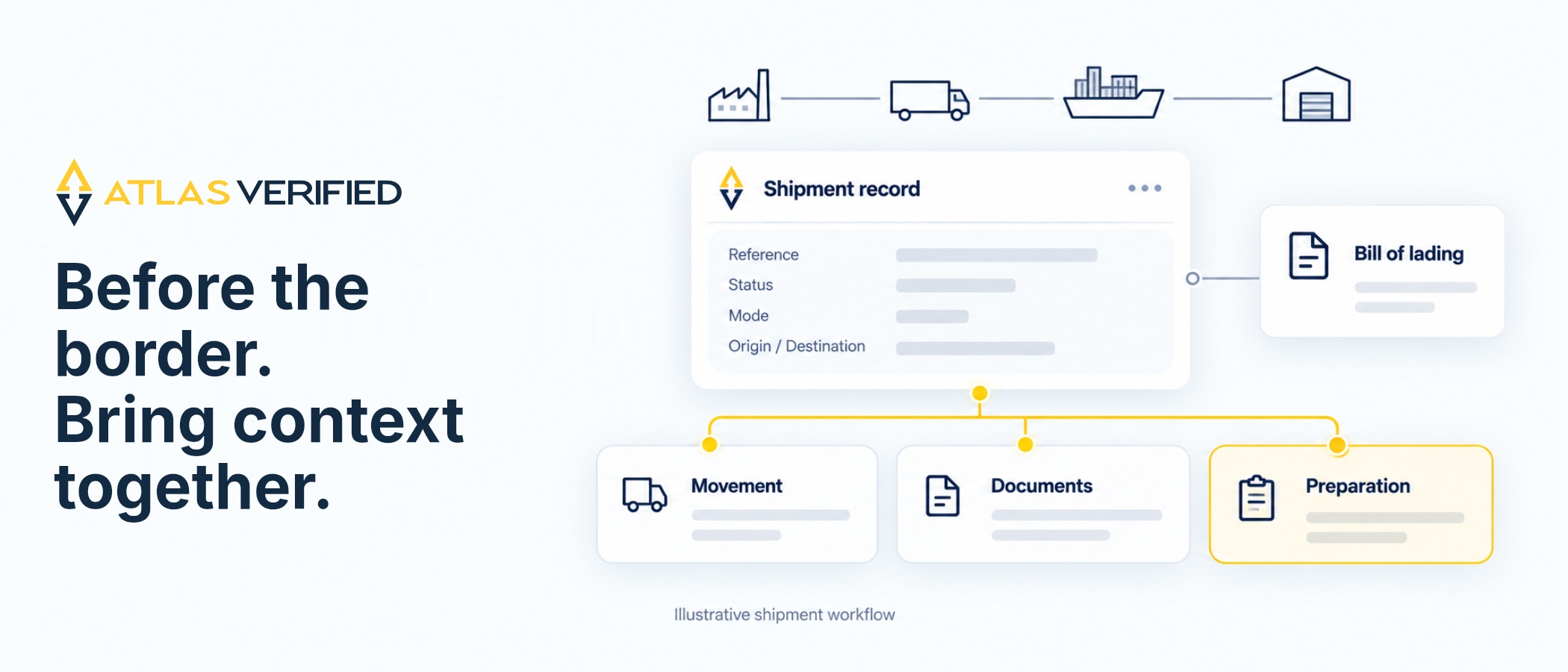
Consider a shipment moving from an inland facility to a port and then overseas. The route is visible, the expected arrival looks reasonable, and the team can see where the cargo is going. Yet the person preparing the documents still needs to confirm which commercial invoice is current, whether the packing list matches the shipment, and who has the missing supporting file. The shipment is moving. The preparation is happening in a separate chain of messages and attachments.
That is an illustrative example, but it describes the problem our shipment work is designed to address. Location, evidence, and preparation all belong to the same movement of goods. When software handles them as unrelated activities, the people involved have to reconnect them at every handoff. A clear tracking screen can coexist with a surprisingly unclear picture of what must happen before the shipment arrives.
We have been bringing those activities together in Atlas: supported transport legs in a common shipment view, documents attached to the working record, controlled sharing with other organizations, and AI assistance for customs preparation. The point is to make it easier to move from seeing the shipment to understanding what the next person needs.
Follow the cargo into the documents
The map gives a team a quick way to orient itself. In a multimodal shipment, it helps people understand the relationship between supported legs without treating every change of transport as a new, disconnected record. But the next useful step often takes place below the map. Someone notices a hold, questions a detail, or needs to prepare for the next handoff. At that moment, the location should lead them into the shipment’s evidence.
Bills of lading are a good example of why that connection matters. A PDF may contain the information the team needs, but making it useful elsewhere can require someone to read it, find the relevant fields, and enter them again. Atlas’s extraction work assists with prefilling a consistent set of bill-of-lading fields. That gives the team a structured record to review and a source document to return to when something looks wrong.
The source remains necessary because extraction is an interpretation. A name read from a scan might be incomplete; two documents might disagree; a value might apply to a different party or stage of the movement. Keeping the document beside the shipment record makes those questions easier to investigate. The benefit is more than reduced typing: the team has a place to connect a shipment detail with the evidence that supports it, and to correct the detail without losing sight of where it came from.
Give the next organization a common record
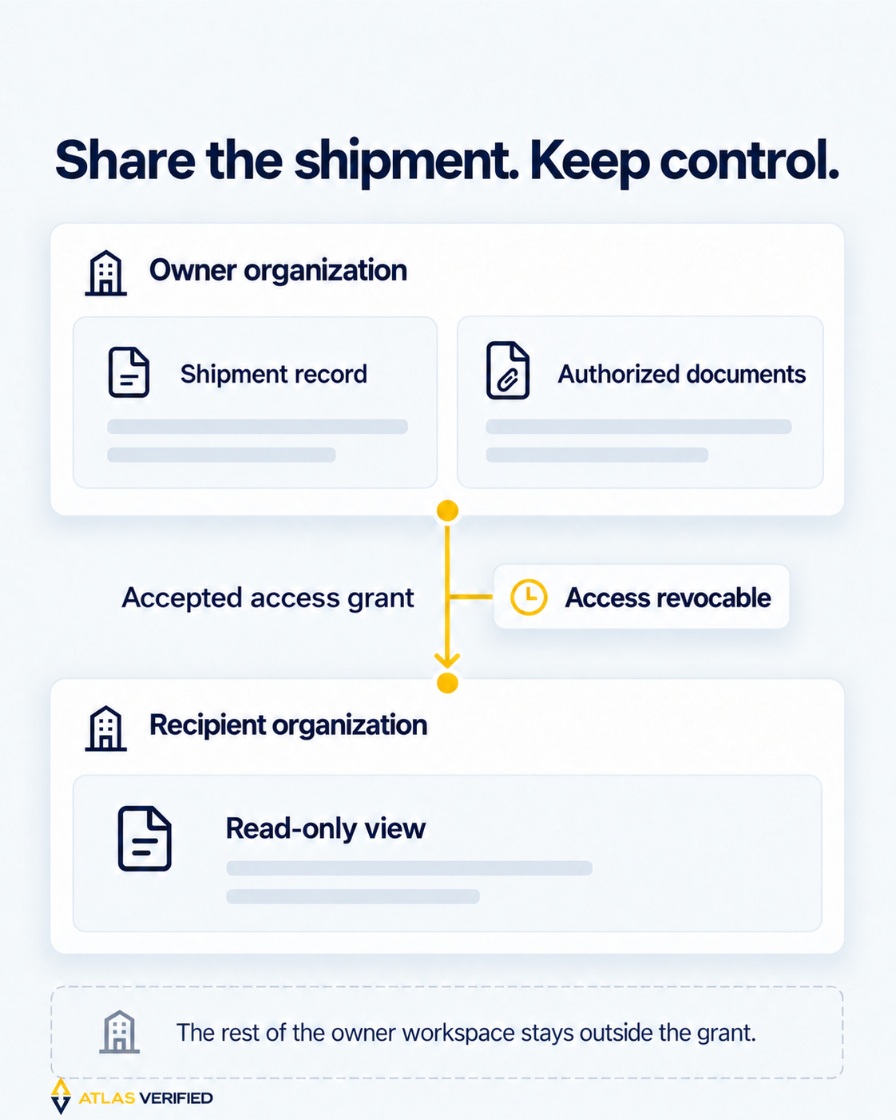
The next handoff often crosses a company boundary. A logistics partner or another authorized participant may need to inspect the same shipment and documents, even though it should not be able to edit the owner’s records. Emailing another packet solves the immediate delivery problem, but the copy begins to age as soon as the source changes. The owner also loses a clear way to manage access when the relationship or assignment ends.
Atlas shipment sharing creates an organization-to-organization access grant. The owner can invite another organization to view a shipment; after acceptance, the recipient can find the shared shipment and inspect its authorized documents. The invitation can expire, and the owner can revoke the resulting access. The shared view is read-only, which lets participants work from the shipment record while preserving the owner’s control over it.
The same boundary applies to AI-assisted investigation. Shared-shipment tools can read the authorized record and documents, but a share does not open the rest of the owner’s organization or automatically place its files in the recipient’s general search index. That is the scope people expect from a shipment handoff: access to the work they have been asked to help with. With the evidence available in that context, the next conversation can begin with the substance of the shipment instead of another request to resend the files.
Turn a packet into preparation work
Once the relevant people can see the record, the next question is what remains to be done. Customs preparation makes that question particularly concrete. A team needs to know which documents are present, which are missing, which can be drafted from the information already available, and which require a responsible person’s review or signature. It also needs the checklist to reflect the shipment’s stage. A document associated with a later step should not look like an unexplained failure before that step is applicable.
Our preparation workflow brings together those checks, supported document drafts, signature steps where applicable, and a package of the available material. AI can help organize the evidence and use existing shipment information to prepare a first draft of supported commercial documents. If a source fact is missing, the useful output is a visible gap. Drafting a manufacturing or transaction statement cannot establish the truth of an activity for which no supporting information has been provided.
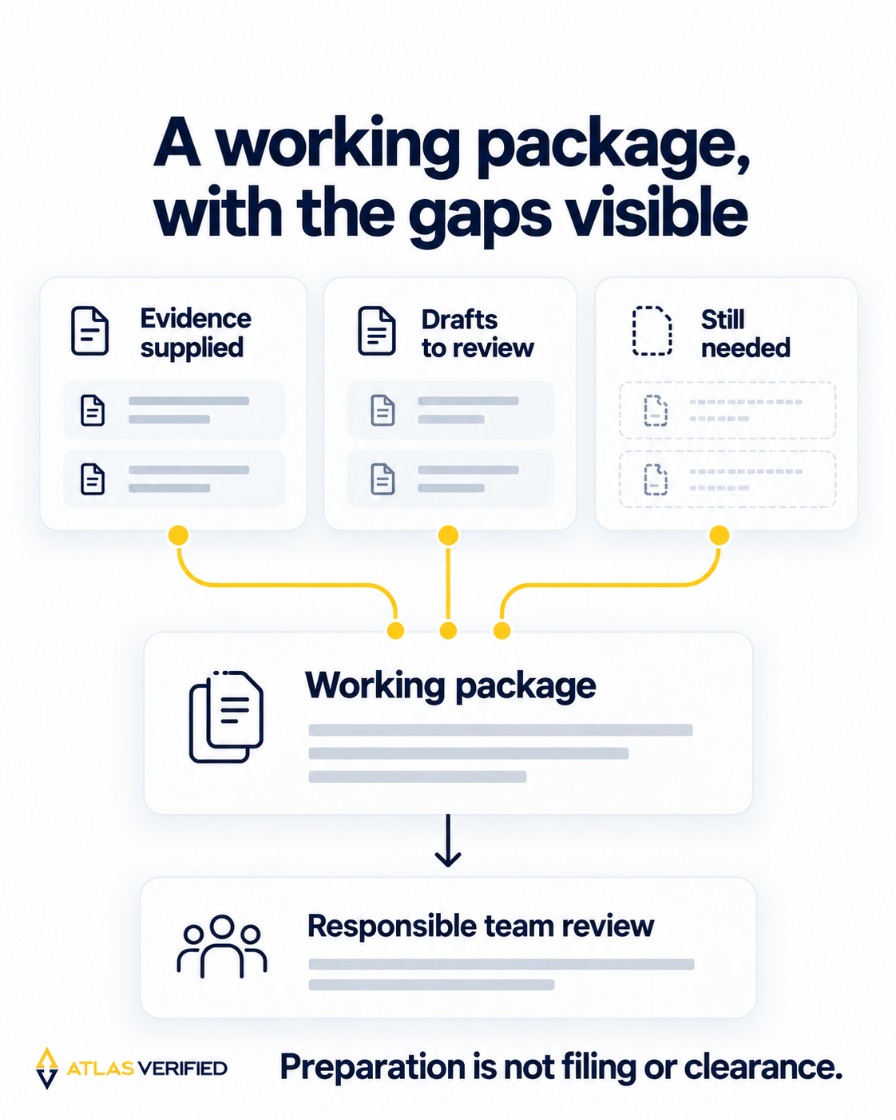
We also allow the package to be useful before every item has arrived. Bringing the available material together helps the team start reviewing and coordinating while the outstanding items remain visible. That makes the packet a working document. The person opening it should be able to distinguish evidence already supplied, drafts requiring review, and material still to be obtained, rather than infer that a neatly assembled document means the shipment is ready.
A better handoff before arrival
Preparation assistance has a defined boundary. Atlas does not submit this package into U.S. Customs and Border Protection systems or guarantee clearance. A checklist can establish that a file is present; the responsible team still has to determine whether its contents are accurate, relevant, and sufficient for the shipment and handle the appropriate filings. Keeping that distinction visible gives the team a more useful account of what the software has actually done.
Our August milestone brings the tracking, sharing, and preparation work into a more connected shipment experience. Validation of the assembled package against live shipment examples remains part of the next stage. That work will help us improve document coverage and the points where people need to inspect or complete the evidence.
Return to the shipment at the beginning of this article. Its arrival date is still important. What changes is the work around it: the team can follow the movement, open the supporting documents, give the next organization appropriate access, and identify the preparation that remains. Each handoff begins with more of the context already in place.
Bring us a shipment packet. Let’s walk through what your team needs before it reaches the border.