
Product launch: October 16, 2026. Added to the News archive October 30, 2026.
The invoice is the beginning of the question
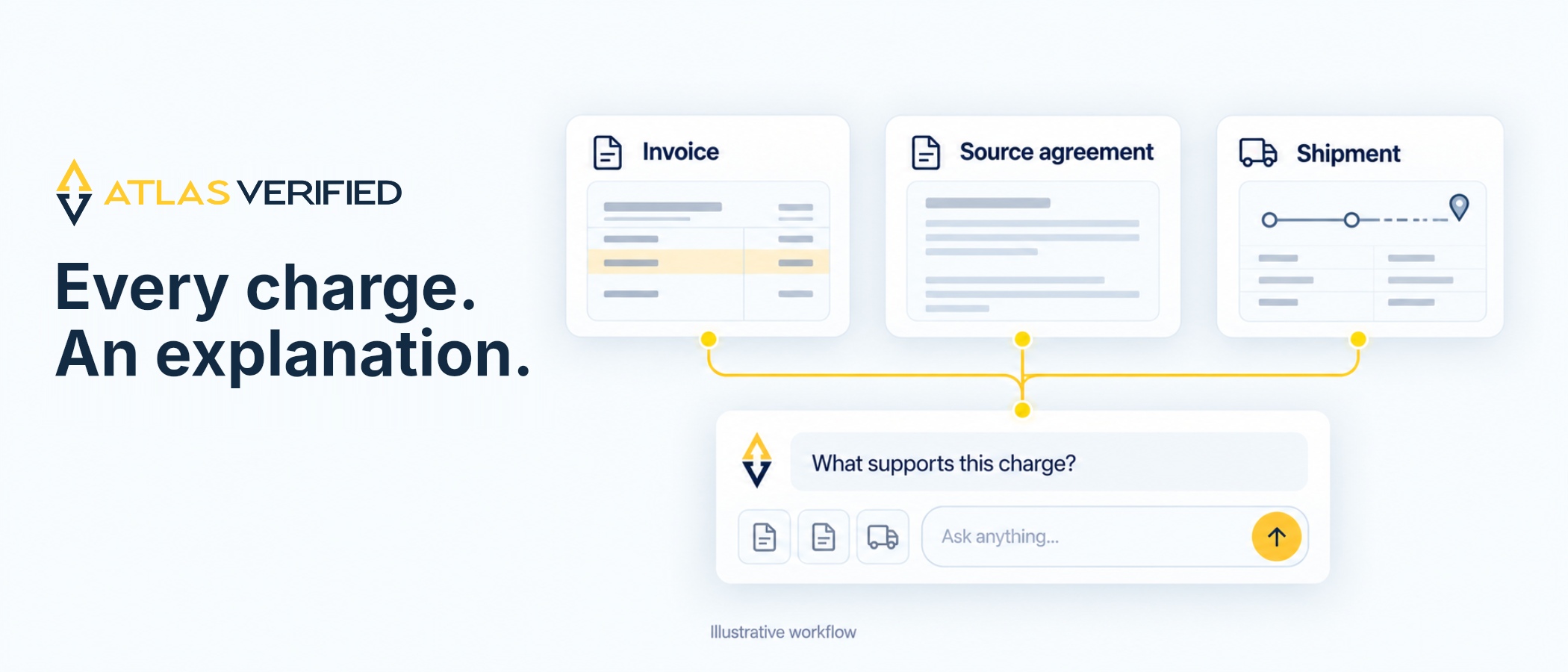
A freight invoice arrives with a fuel charge, a detention charge, and a total that looks plausible. The hard part is deciding whether those charges belong there. The answer may be spread across a carrier agreement, a dated rate sheet, an appointment record, and the shipment itself. A spreadsheet can add the numbers. Someone still has to establish what each number means.
We built Atlas Freight Intelligence to bring that work into the conversation. Ask Atlas to inspect a charge, compare a tariff scenario, or review an invoice against the evidence attached to a shipment. The result keeps its source, assumptions, and unresolved questions close enough to examine.
Explore Freight Intelligence at atlasverified.ai/products/freight-intelligence.
A useful answer shows its working
An invoice line and a contract clause are different kinds of evidence. One says what was billed; the other may establish the terms that should apply. Before comparing them, you need to know whether they describe the same shipment, which schedule was effective, what currency it uses, and whether the charge is fixed, percentage-based, or calculated per unit. A confident answer built on the wrong basis is still the wrong answer.
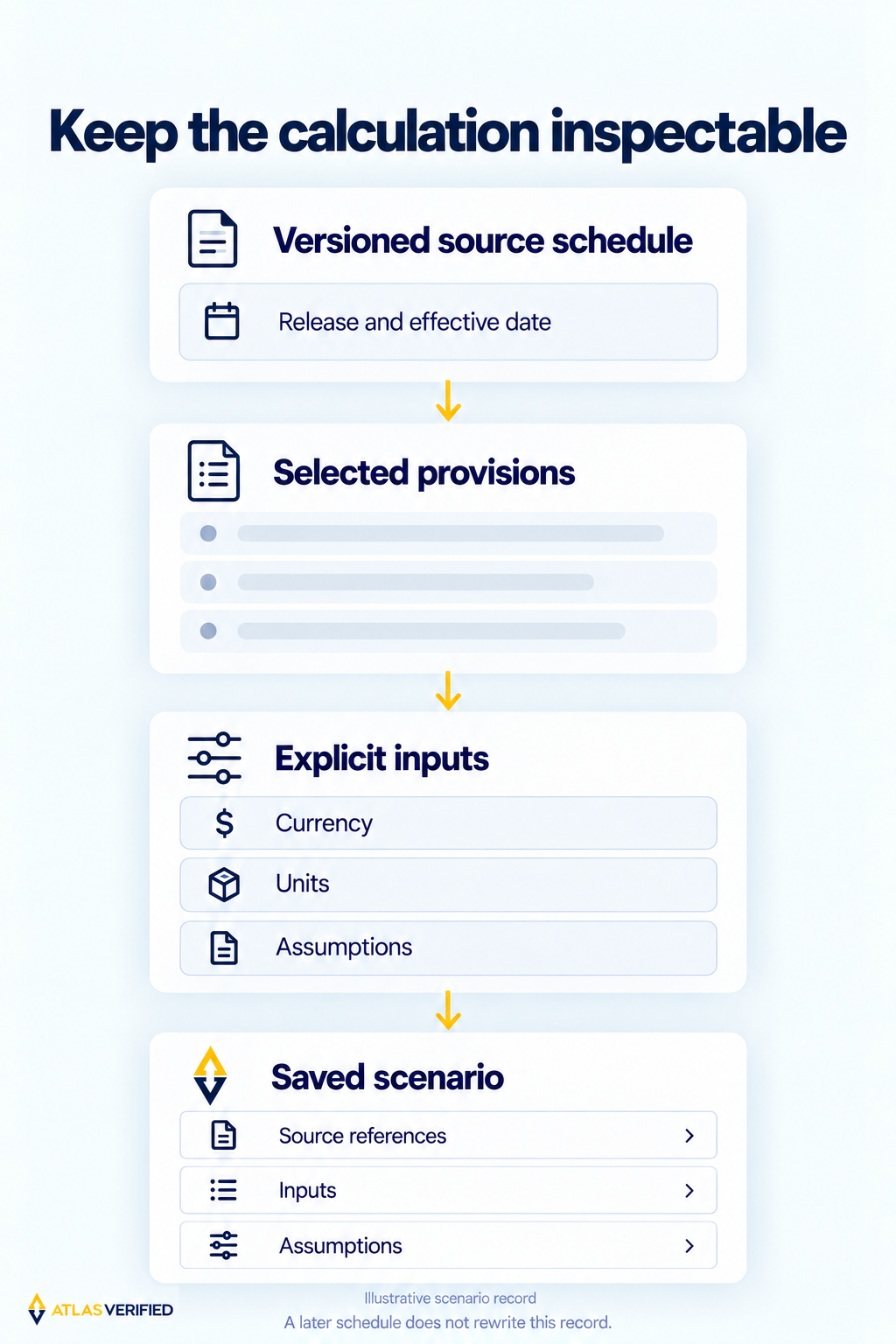
Atlas keeps those inputs with a saved scenario. Customs and carrier tariffs use their own source schedules and calculation bases. The selected provisions, source release, inputs, and assumptions remain part of the record, so another person can inspect how the result was produced. A later change to the schedule does not quietly rewrite the earlier calculation.
This is also why we distinguish a scenario from a final bill. A scenario covers the provisions selected and the inputs supplied. It cannot establish a charge that depends on evidence nobody has provided. That distinction needs to survive the calculation and remain visible when the result is presented.
The missing appointment record matters
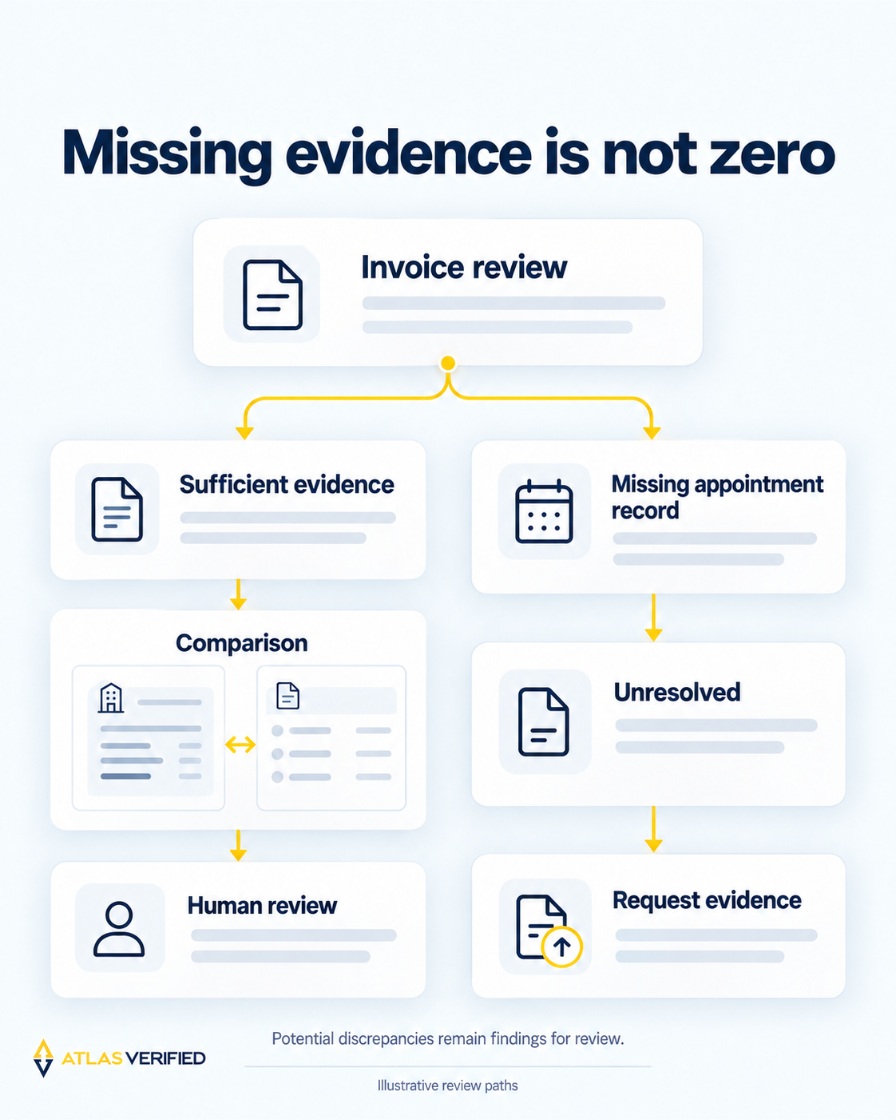
Consider detention. The invoice may list a charge, and the agreement may explain the free-time allowance. Without the relevant appointment and arrival records, there may still be no sound way to determine whether the charge is supported. Substituting zero would make the arithmetic easier while hiding the actual problem.
In Atlas, missing required inputs and unsupported provisions stay unresolved. The team can see what is missing and return to it when the evidence arrives. A difference between a mapped invoice charge and a saved scenario is presented as a potential discrepancy for review. It becomes a question to investigate against the applicable terms, not a promise of a refund.
That changes the handoff. The colleague reviewing the work receives the finding together with the source references and the outstanding evidence. They do not have to reconstruct an earlier conversation to understand why the item needs attention.
Your commercial knowledge belongs beside the shipment
Trade teams have knowledge that will never appear in a public tariff table. A customer has a special delivery requirement. A carrier agreement includes an exception. A lane uses terms that differ from the standard operating procedure. The usefulness of an AI answer depends on whether it can work with those details in the right context.
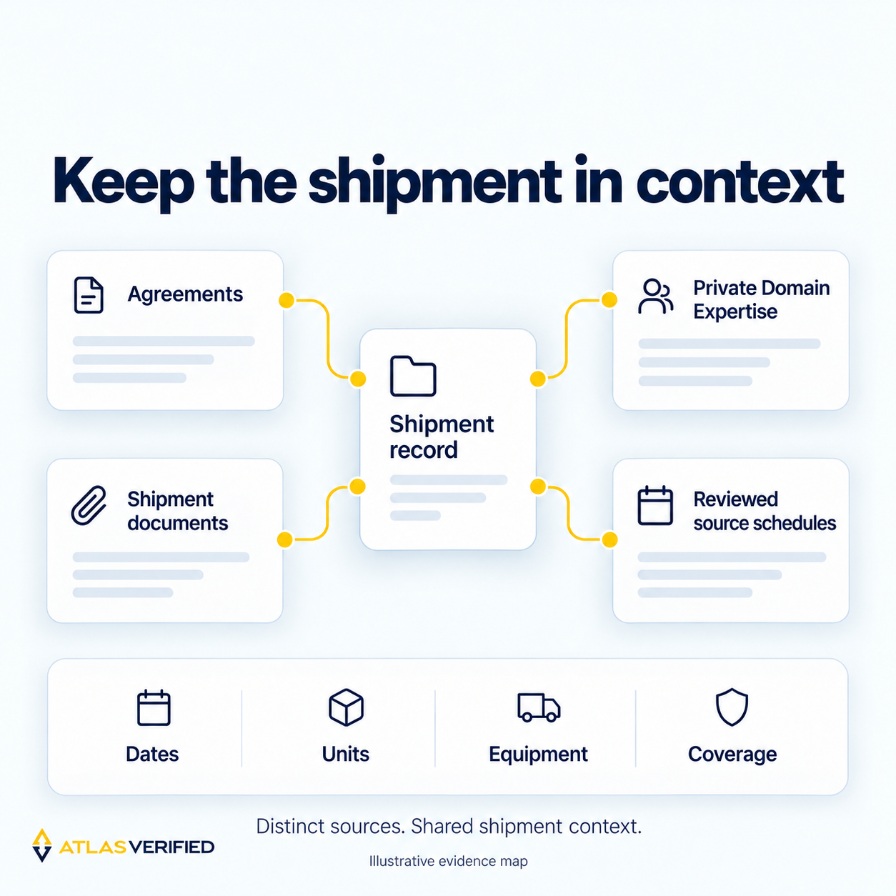
Freight Intelligence uses reviewed source schedules and the organization’s private Domain Expertise alongside shipment documents. Tenders, confirmations, bills of lading, delivery records, invoices, and customs documents can contribute different parts of the explanation. Atlas brings them into a shared shipment context while retaining the dates, units, equipment, coverage, and source limits that make comparisons meaningful.
Commercial rates from an uploaded agreement and a stored public benchmark are distinct observations. Neither should be presented as a live quote simply because it appears in an AI response. Keeping those distinctions explicit is part of making the answer usable.
From a question to a reviewable decision
The workflow starts with the material your team already has: a shipment, its documents, the applicable schedules, and the expertise that governs the work. Ask Atlas to compare a scenario or inspect the invoice. Open the evidence behind the result, resolve the gaps, and record the decision.
Booking, filing, and payment remain with the people and service providers responsible for them. Atlas helps the team understand the work before taking those actions. Our aim is straightforward: when a charge is questioned, the next person should be able to follow the explanation all the way back to the evidence.